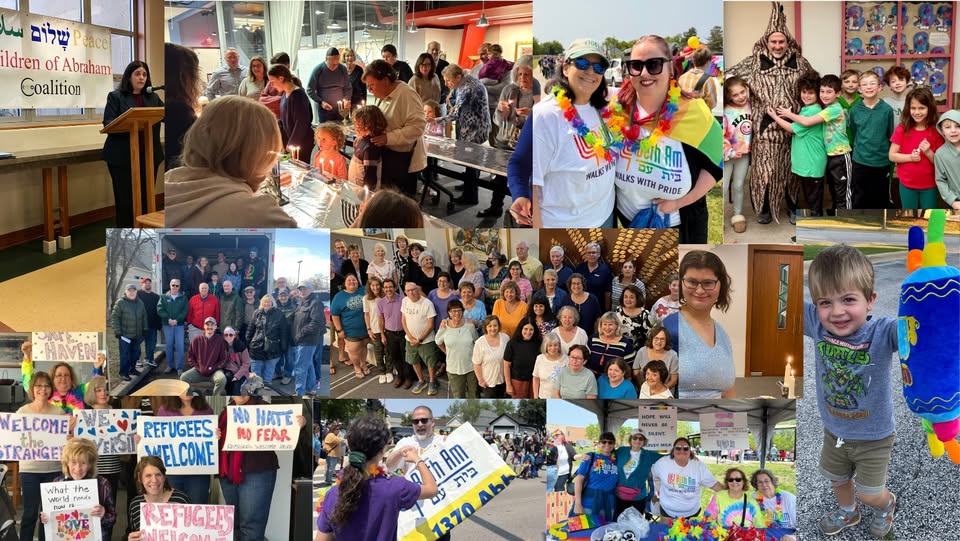
You are welcome here.

Choose Kindness • Find Joy • Repair the World


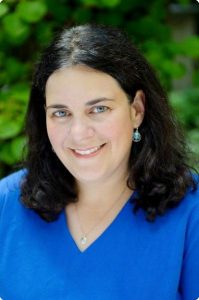
A Message from Rabbi Bellows

Rabbi Bellows

October 11, 2026/30 Tishrei 5787

Dear Friends,

In Parashat Lech Lecha, God’s first words to Abraham are lech lecha, “go forth.” Yet Abraham doesn’t go alone. The journey Abraham and Sarah begin is the story of a family becoming a people, bound to one another across distance and generations.

The Talmud expresses this connection in four words: kol Yisrael arevim zeh bazeh, “all of Israel are responsible for one another” (Shevuot 39a). The word arevim means more than being connected. It means being answerable to one another, as a guarantor stands behind a loan. When part of our people faces a decisive moment, the rest of us are not merely spectators.

On October 27, Israelis are scheduled to vote for a new Knesset. And it is vital to understand what is at stake for us as American Reform Jews in the upcoming election.

The election will help shape Israel’s security, the health of its democracy, and the relationship between the Jewish state and Jews around the world. It will also affect the lives of innocent Palestinians, whose safety, dignity, freedom, and future matter deeply. The policies and priorities of Israel’s next government will have consequences for the possibilities of peace and for whether Israelis and Palestinians can envision a future in which both peoples live with security and human dignity.

As Jews, we cannot separate our concern for Israel from our concern for the humanity of those who live alongside it. Caring about Israeli security and caring about innocent Palestinian lives are not competing commitments. Both emerge from the conviction that every human being is created b’tzelem Elohim, in the image of God. 

The election will also affect whether Israel recognizes and makes room for the many ways of being Jewish. Questions of marriage, conversion, and equal standing for non-Orthodox Jews are not abstract political debates for our Reform siblings in Israel. They affect their daily lives, their families, and their ability to practice Judaism as they understand it.

Being connected to Israel does not mean agreeing with every Israeli government or every political position. Nor does caring about Israel mean that we must all reach the same conclusions. It means understanding that the choices Israelis make have consequences beyond Israel’s borders—and that we have a responsibility to understand those choices and what they may mean for our people.

I hope you will register for the upcoming webinar on the Israeli Elections, Israel’s 2026 Elections: Implications for the Israeli Reform Movement, Religious Pluralism, and Israeli Democracy. By registering, you will be sent the recording if you are unable to attend. The event takes place today, Sunday at noon.

May those who vote do so with wisdom. May those who lead do so with humility. And may the One who makes peace in the heavens, oseh shalom bimromav, bring peace to Israel, to our people, and to all the world.

Rabbi Bellows